

"Told Stories" series: Long Way Home
By Nicola Colville
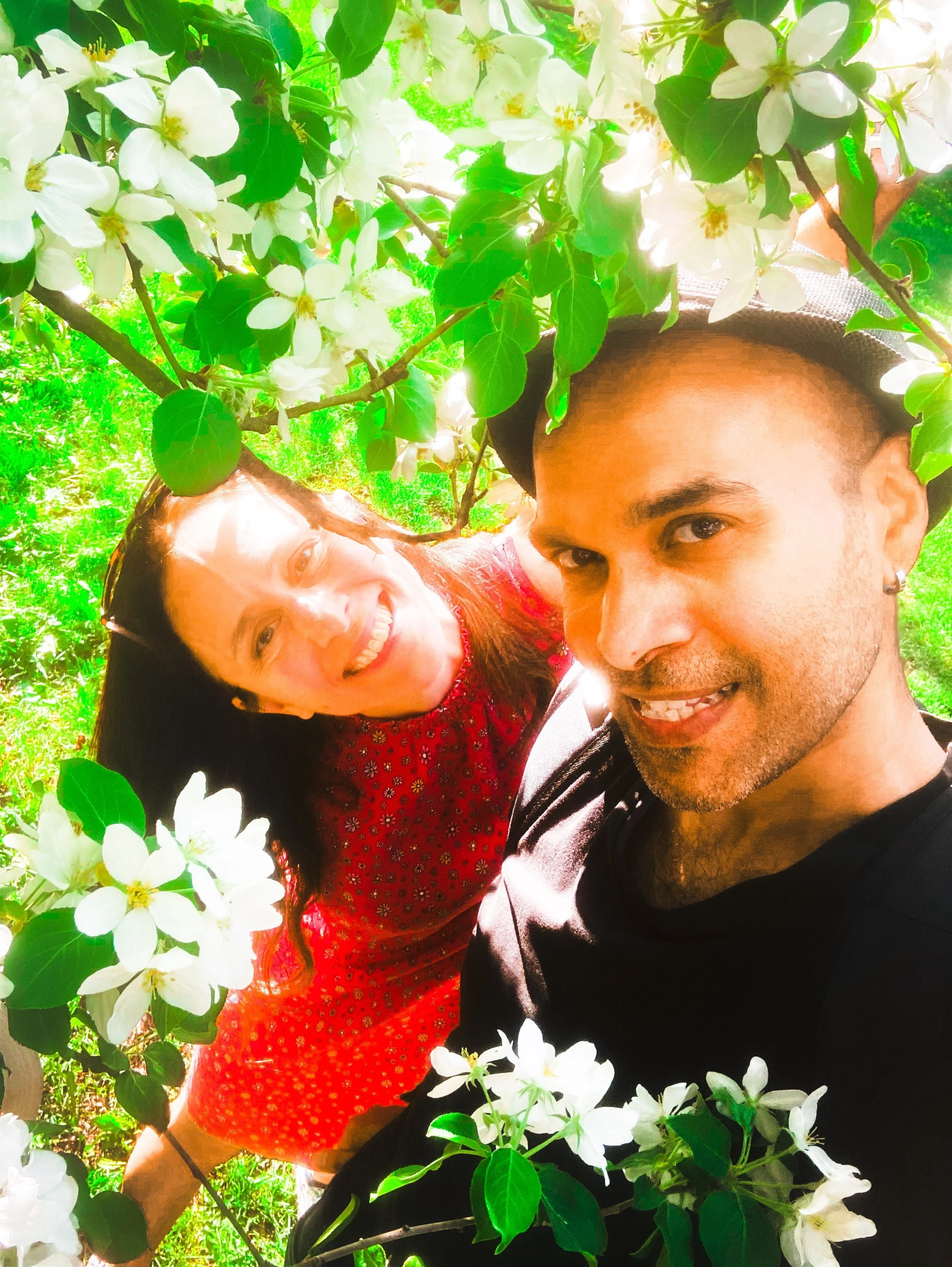
Before we had barely settled into conversation, Deva confessed something. He had almost canceled, unsure he had much of a story to tell. That admission stayed with me long after our conversation ended, because by the time we stood up to leave, I knew the opposite was true. The stories that stay with us aren’t always the loudest ones. More often, they reveal themselves slowly, through passing remarks, gentle humor, and observations that seem almost incidental until you begin to notice the threads connecting them.
One of the first threads appeared as a child growing up in Mauritius. Yoga wasn’t presented as a philosophy or a way of life. An ashram was located next door to the family home, and on Sunday mornings the neighborhood children would wander over to stretch and move together. He was about 10 years old. Too young to know that the activity they were enjoying even had a name. To him, it was simply a place to run around with friends while the adults enjoyed a little peace and quiet.
Children rarely recognize the significance of ordinary moments while they’re living them.
Only years later do those moments quietly return and ask to be seen differently.
Life carried Deva a long way from those Sunday mornings. University came next, where he studied French literature. Then France. South Korea. Western Canada. And eventually Montreal. Different countries. Different languages. Different versions of himself. Looking back, there is something beautifully circular about the journey. The little boy who wandered into an ashram without knowing what yoga was would, decades later, find himself climbing the stairs to Luna Yoga in the heart of Old Montreal.
Not because he had been searching for it.
Because life, somehow, had been.
When Deva first speaks about Luna, he doesn’t begin with his first class. He begins with Katy, a friend and former Luna Yoga teacher.
For four years, she invited him to explore a class. For four years, he declined.
“I’ve never really liked physical exercise,” he told me. The gym had never appealed to him. It always felt like something he ought to do rather than something he wanted to do.
As far as he was concerned, yoga belonged in exactly the same category.
So, he kept saying no.
Then, life took a challenging turn, and yoga found its way back into the conversation.
A difficult period at work left him emotionally exhausted. Teaching English as a second language, something he had devoted his professional life to, had gradually become a source of stress rather than fulfillment. There came a point when stepping away from work, even temporarily, felt less like a choice and more like a necessity.
It was during that time that she asked him one more time. Maybe now, she suggested, yoga was exactly what he needed.
This time he listened. Not because he had suddenly fallen in love with the idea of yoga.
Simply because he had run out of reasons not to.
So many stories celebrate certainty, yet most of us don’t arrive at meaningful changes because we suddenly become convinced. We arrive because life gently removes the reasons we’ve been holding on to.
Deva’s first flo class wasn’t transformational. He laughed as he described it. The room was warm. His breathing hadn’t yet found its rhythm. His mat became so damp from sweat that he found himself sliding across it and wondering what on earth he had signed himself up for.
It would have been a perfectly reasonable place to stop.
Instead, he came back. Then he came back again.
Within a week, he had bought an unlimited membership. He explored every type of class. For the first time in his adult life, movement didn’t feel like punishment. It felt like somewhere he genuinely wanted to be. He lives nearly forty minutes from the studio. It’s a journey many people would think twice about making it after work. Deva makes it almost every day. Not because it’s convenient. Because some places become worth traveling towards.
For the first two years, however, he experienced Luna almost anonymously. He would arrive quietly. Place his mat near the back or in a corner. Practice. Smile politely. Leave.
Then, little by little, something shifted. People started talking to him. He began to take part in the conversations around him. Conversations became familiar faces. Familiar faces became friendships.
“I feel like I found my tribe at Luna,” he said. “It only took fifty years.” He hadn’t arrived looking for community. As he put it himself, he had found something he was never really looking for it in the first place.
But that’s how a community often works. It rarely arrives all at once. It gathers quietly through hundreds of ordinary interactions until one day you realize you belong. As we talked, I noticed that Deva often described his practice in terms of what still lay ahead. He spoke about wanting to understand the purpose of intention more deeply. About still feeling drawn towards exploring the spiritual side of yoga. About the headstand that continued to elude him and the postures he admired in others. There was no frustration in the way he spoke about these things, only honesty. A quiet acknowledgment that, for him, the practice was still unfolding.
Yet woven through those acknowledgments were moments that seemed to tell their own story.
Almost in passing, he mentioned becoming more patient with his students. He spoke about remembering to breathe before reacting during difficult days at work and about leaving frustrations at the studio instead of carrying them home. These weren’t presented as milestones or achievements. They were simply observations he had made about himself over the past few years. At one point, I wondered aloud whether the patience he now offered his students might also be the patience he was beginning to offer himself.
He paused. Then he smiled. ”I never thought of it that way.”
It was one of the few moments during our conversation when neither of us spoke for a little while.
Not because there was nothing left to say. But because some thoughts need a little space before they settle.
What stayed with me afterward wasn’t whether Deva had found the spiritual side of yoga. It was his willingness to keep asking the question. There is something humbling in someone who believes there is still more to learn. Perhaps that curiosity is part of the practice too.
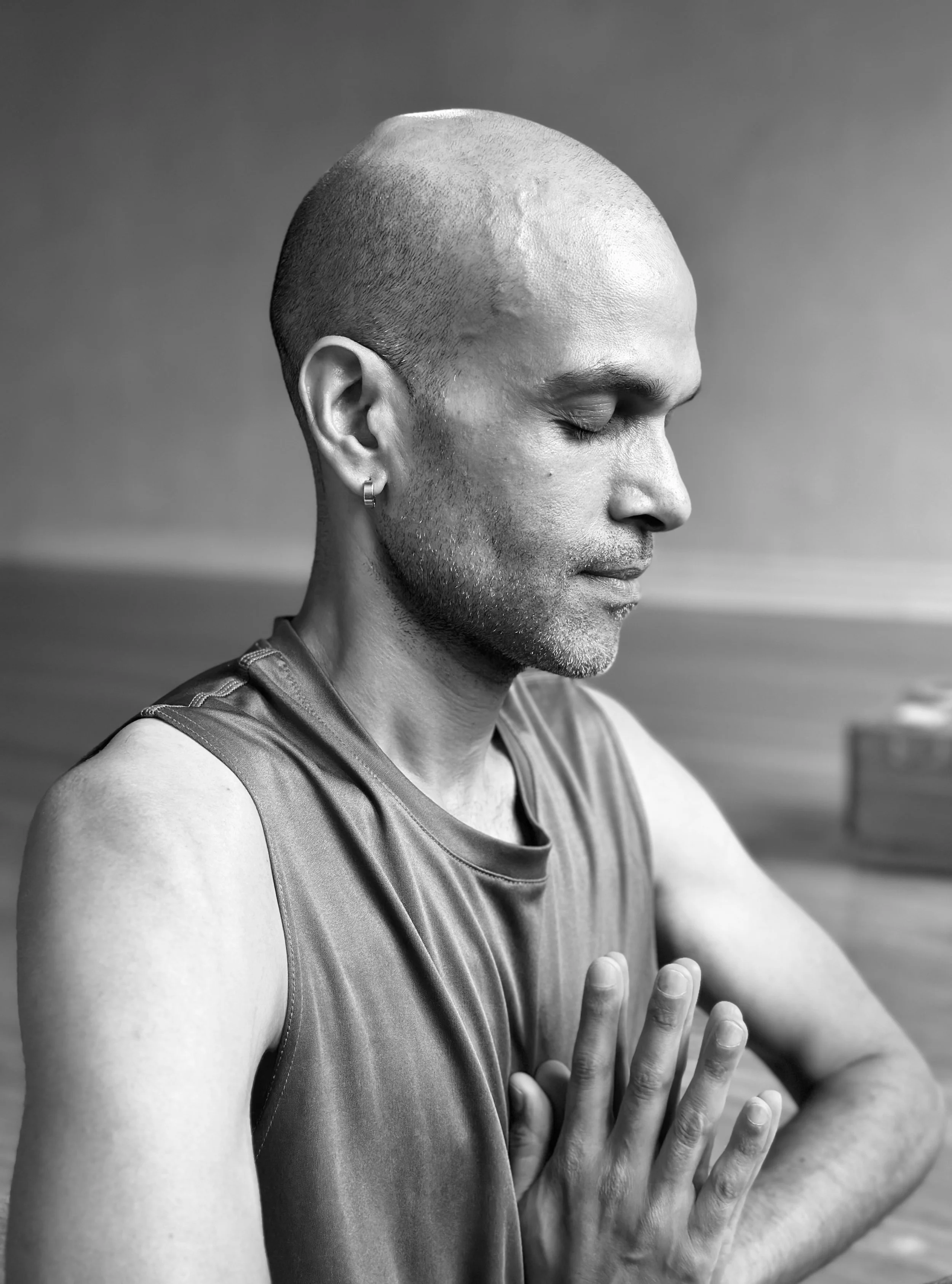
Deva mentioned inviting his niece to practice yoga. He spoke about it as though it was nothing more than a way to spend time together.
He hadn’t noticed the symmetry.
Years earlier, Katy had patiently kept inviting him until he finally said yes. Now, almost without realizing it, he had invited his niece into the same practice. Throughout our conversation, he often spoke about Katy. His students. His niece. The teachers who had inspired him. Fellow community members. In telling his own story, he seemed happiest talking about the people who had quietly shaped it. That’s because Deva rarely places himself at the center of his own story. He’s much more interested in everyone else’s.
Maybe that’s also why people enjoy being around him. There is an ease about him that never feels manufactured. A humility that doesn’t ask to be noticed. A warmth that reveals itself gradually, rewarding those who take the time to get to know him.
These days, if you spend time at Luna, you’ll probably find Deva chatting with someone before class, welcoming new and familiar faces at reception, or laughing with friends. You would never guess there was a time when he quietly unrolled his mat in the corner and hoped nobody would notice him. Then again, that is exactly what yoga — and community — so often do. They don’t ask us to become someone else. They patiently create enough space for us to become more fully ourselves.
I don’ remember the chronology of our conversation nearly as much as I remember the feeling it left me with.
Profound change doesn’t always arrive dramatically.
Sometimes it looks like saying yes after years of saying no.
Sometimes it looks like commuting over an hour round trip because there is a place where you feel more like yourself than anywhere else.
And sometimes it looks like deciding not to cancel a conversation because you don’t think your story is worth telling.
I’m very glad Deva did.
